| 書目名稱 | The Feeling Economy | | 副標(biāo)題 | How Artificial Intel | | 編輯 | Roland T. Rust,Ming-Hui Huang | | 視頻video | http://file.papertrans.cn/910/909629/909629.mp4 | | 概述 | Defines the emerging Feeling Economy in response to AI embracing analytical and intuitive tasks.Examines how management and consumer behavior are impacted by AI.Explains the role that demographics and | | 圖書封面 | 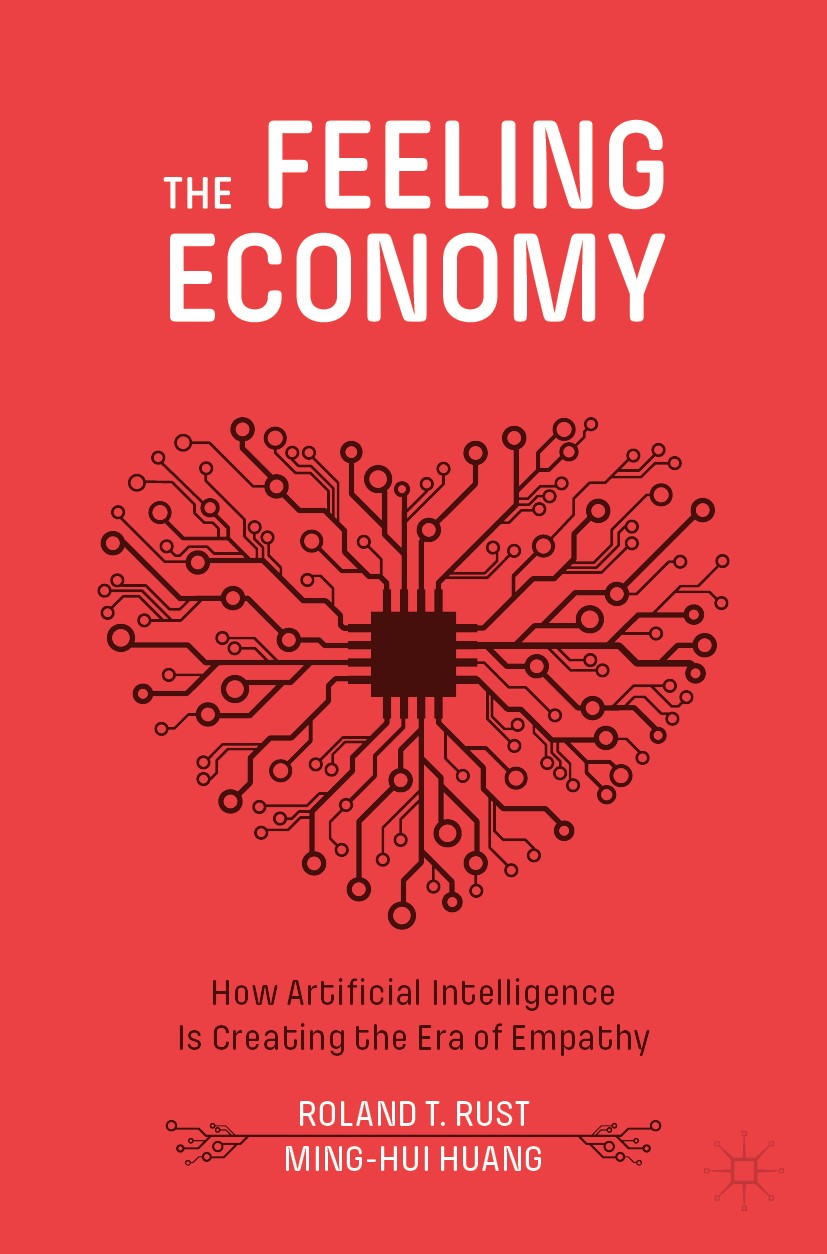 | | 描述 | .As machines are trained to “think,” many tasks that previously required human intelligence are becoming automated through artificial intelligence. However, it is more difficult to automate emotional intelligence, and this is where the human worker’s competitive advantage over machines currently lies. This book explores the impact of AI on everyday life, looking into workers’ adaptation to these changes, the ways in which managers can change the nature of jobs in light of AI developments, and the potential for humans and AI to continue working together. .The book argues that AI is rapidly assuming a larger share of thinking tasks, leaving human intelligence to focus on feeling. The result is the “Feeling Economy,” in which both employees and consumers emphasize feeling to an unprecedented extent, with thinking tasks largely delegated to AI. The book shows both theoretical and empirical evidence that this shift is well underway. Further, it explores the effect of the Feeling Economy on our everyday lives in the areas such as shopping, politics, and education. Specifically, it argues that in this new economy, through empathy and people skills, women may gain an unprecedented degree o | | 出版日期 | Book 2021 | | 關(guān)鍵詞 | Artificial intelligence; thinking economy; automation; physical economy; emotional communication; AI and | | 版次 | 1 | | doi | https://doi.org/10.1007/978-3-030-52977-2 | | isbn_softcover | 978-3-030-52976-5 | | isbn_ebook | 978-3-030-52977-2 | | copyright | The Editor(s) (if applicable) and The Author(s), under exclusive licence to Springer Nature Switzerl |
The information of publication is updating

|
|


 |Archiver|手機版|小黑屋|
派博傳思國際
( 京公網(wǎng)安備110108008328)
GMT+8, 2025-10-23 21:18
|Archiver|手機版|小黑屋|
派博傳思國際
( 京公網(wǎng)安備110108008328)
GMT+8, 2025-10-23 21:18






 發(fā)表于 2025-3-21 16:42:13
