| 書(shū)目名稱(chēng) | Small State Behavior in Strategic and Intelligence Studies | | 副標(biāo)題 | David’s Sling | | 編輯 | Patrick C. Coaty | | 視頻video | http://file.papertrans.cn/869/868523/868523.mp4 | | 概述 | Offers an analysis that builds strategic/intelligence theory into a practical foreign/defense policy application.Introduces the tools of analyzing strategic and intelligence issues.Dispels the myths s | | 圖書(shū)封面 | 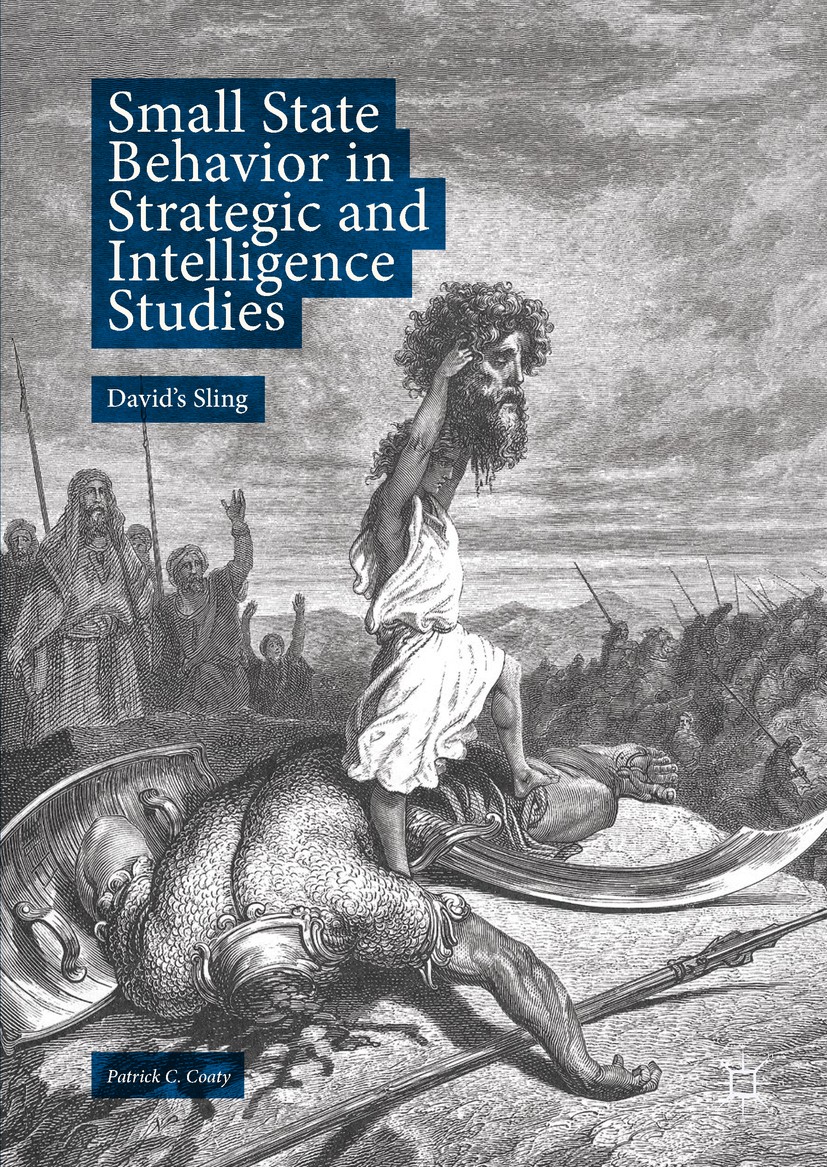 | | 描述 | .Small state behavior has been largely ignored by academics in both international relations and strategic/intelligence studies. Yet, when we analyze the root causes of war, insurrections, rebellions, revolutions and general sociological human behavior, it is the small state actors that are usually at the epicenter of the tumultuous event. It is the spark from inside the small state actor – whether it is Serbia, Czechoslovakia, Cuba, Vietnam, Kuwait, Iraq or Syria -- that seemingly leads to internal and external confrontations that inevitably involve much larger states. To date, a book length analysis like this has yet to be published...The scope of this project is to provide an analysis of a sampling of small state’s behavior in order to build on a unifying theory of security/intelligence studies. This analysis will necessarily survey the breadth of security/intelligence studies from Clausewitz to current applicable United Nations’ Resolutions and international law. In short, if we can understand how political structures affect the behavior of small states, it will be a major contribution to the field of security/intelligence studies enabling policy makers, scholars and the general | | 出版日期 | Book 2019 | | 關(guān)鍵詞 | Small state; proliferation; strategy; OODA Loop; Max Weber; Rationality; Power; International Environment; S | | 版次 | 1 | | doi | https://doi.org/10.1007/978-3-319-89447-8 | | isbn_softcover | 978-3-030-07772-3 | | isbn_ebook | 978-3-319-89447-8 | | copyright | The Editor(s) (if applicable) and The Author(s) 2019 |
The information of publication is updating

|
|


 |Archiver|手機(jī)版|小黑屋|
派博傳思國(guó)際
( 京公網(wǎng)安備110108008328)
GMT+8, 2026-1-25 07:02
|Archiver|手機(jī)版|小黑屋|
派博傳思國(guó)際
( 京公網(wǎng)安備110108008328)
GMT+8, 2026-1-25 07:02






 發(fā)表于 2025-3-21 16:45:12




