| 書目名稱 | Fuzzy Cognitive Maps | | 副標(biāo)題 | Best Practices and M | | 編輯 | Philippe J. Giabbanelli,Gonzalo Nápoles | | 視頻video | http://file.papertrans.cn/352/351178/351178.mp4 | | 概述 | Contains up-to-date guidance for practitioners of fuzzy cognitive maps (FCMs).Includes problems and examples.Is a concise, one-volume introduction to the subject | | 圖書封面 | 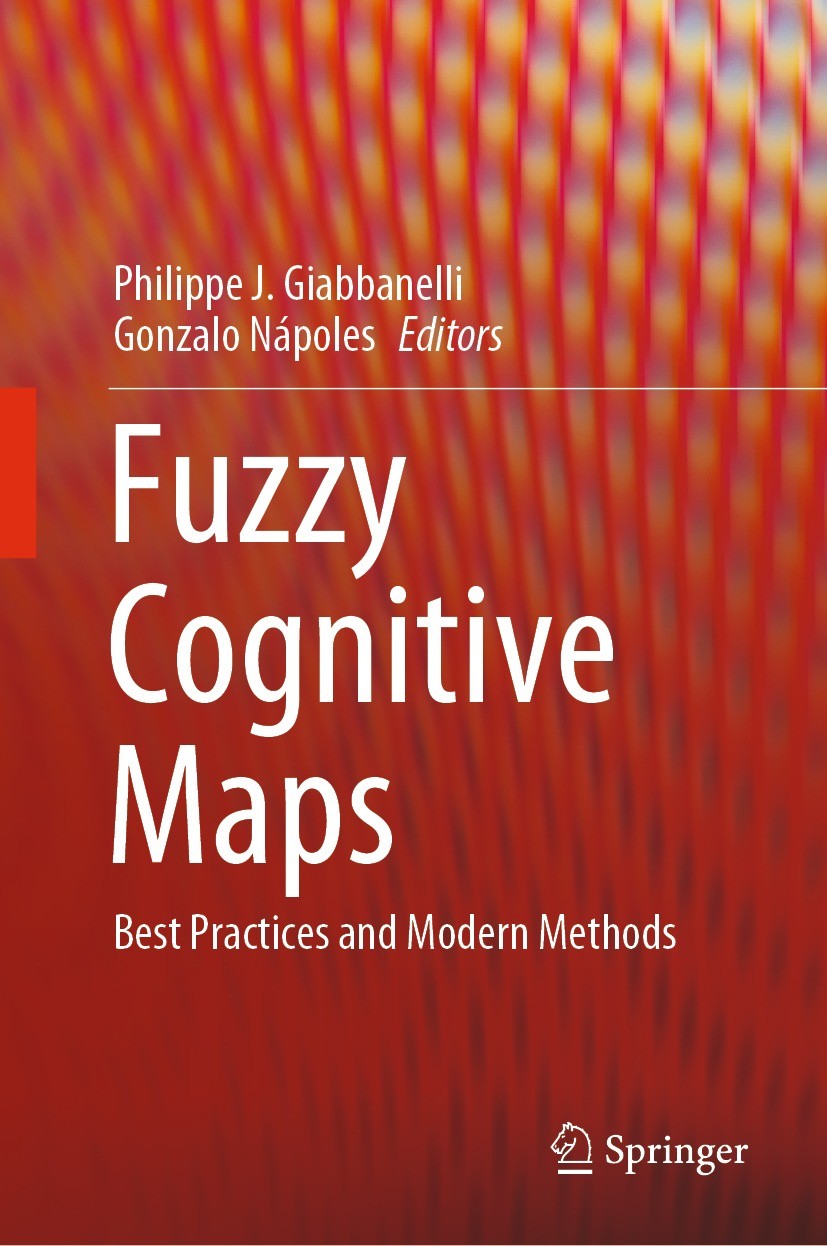 | | 描述 | .This book starts with the rationale for creating an FCM by contrast to other techniques for participatory modeling, as this rationale is a key element to justify the adoption of techniques in a research paper. Fuzzy cognitive mapping is an active research field with over 20,000 publications devoted to externalizing the qualitative perspectives or “mental models” of individuals and groups. Since the emergence of fuzzy cognitive maps (FCMs) back in the 80s, new algorithms have been developed to reduce bias, facilitate the externalization process, or efficiently utilize quantitative data via machine learning. It covers the development of an FCM with participants through a traditional in-person setting, drawing from the experience of practitioners and highlighting solutions to commonly encountered challenges. The book continues with introducing principles of simulations with FCMs as a tool to perform what-if scenario analysis, while extending those principles to more elaborated simulation scenarios where FCMs and agent-based modeling are combined. Once an FCM model is obtained, the book then details the analytical tools available for practitioners (e.g., to identify the most important | | 出版日期 | Book 2024 | | 關(guān)鍵詞 | Fuzzy Cognitive Maps; Participatory Modeling; Interpretable Neural Models; Recurrent Neural Networks; Me | | 版次 | 1 | | doi | https://doi.org/10.1007/978-3-031-48963-1 | | isbn_softcover | 978-3-031-48965-5 | | isbn_ebook | 978-3-031-48963-1 | | copyright | The Editor(s) (if applicable) and The Author(s), under exclusive license to Springer Nature Switzerl |
The information of publication is updating

|
|


 |Archiver|手機(jī)版|小黑屋|
派博傳思國(guó)際
( 京公網(wǎng)安備110108008328)
GMT+8, 2025-10-16 05:01
|Archiver|手機(jī)版|小黑屋|
派博傳思國(guó)際
( 京公網(wǎng)安備110108008328)
GMT+8, 2025-10-16 05:01






 發(fā)表于 2025-3-21 16:42:15
