| 書目名稱 | c-Myc Function in Neoplasia | | 編輯 | Chi V. Dang,Linda A. Lee | | 視頻video | http://file.papertrans.cn/243/242716/242716.mp4 | | 叢書名稱 | Medical Intelligence Unit | | 圖書封面 | 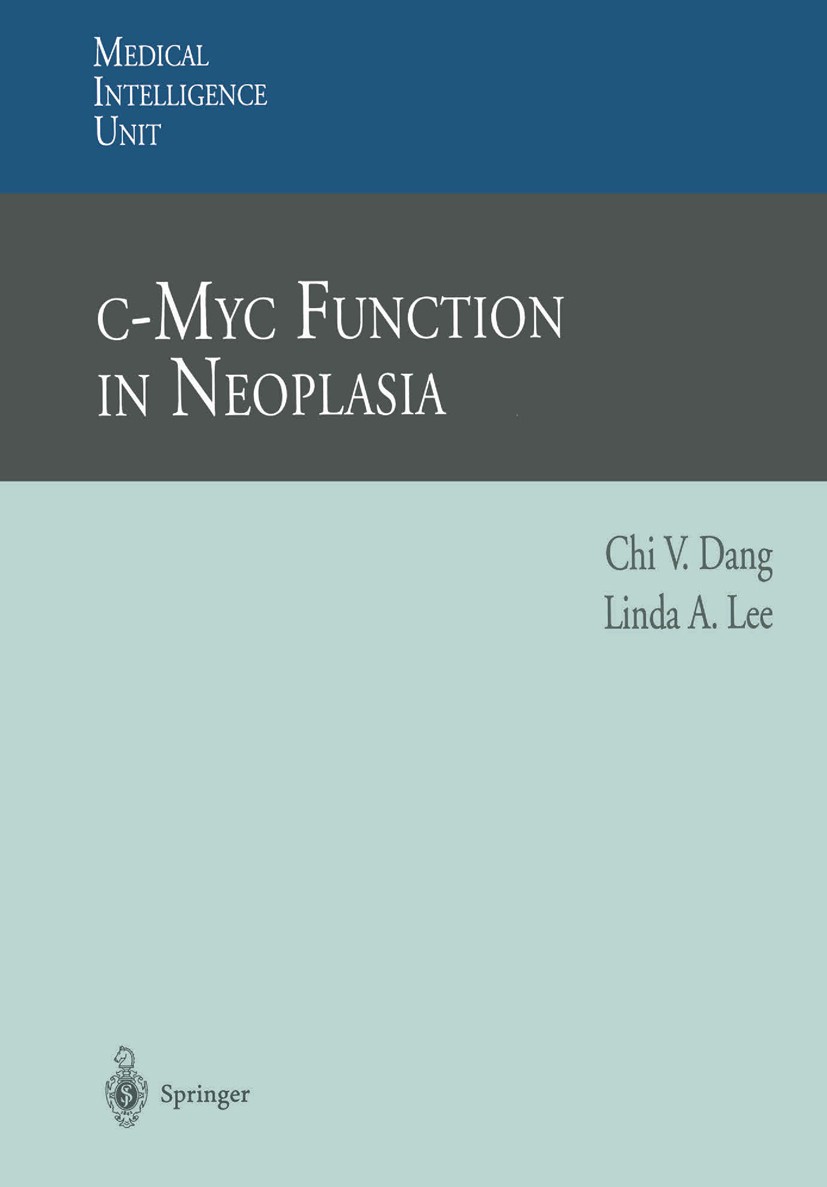 | | 描述 | 1. 1 SCOPE OF BOOK n explosion of novel findings in the past decade has contrib- A uted to the great progress toward understanding the biology of human cancers. Much of this progress can be attributed to our abil- ity to dissect many biological processes at the molecular level. Most spectacular is the technology of molecular biology that allows identi- fication and characterization of genes that participate in the genesis of human cancers. Three major groups of genes appear to play out the drama of cancer development: tumor suppressor genes, mis- match repair genes, and oncogenes. The tumor suppressor genes 1 encode products that are inhibitory to cell proliferation. The loss of these inhibitors, by mutation or deletion, can unleash cells from their restraints to proliferate. Mutations in the mismatch repair 2 10 genes also have been implicated in tumorigenesis. - The inability of cells to repair spontaneously occurring mutations leads to genom- ic instability and could potentially result in the accumulation of car- cinogenic DNA lesions. Finally, activation of proto-oncogenes, which are normal cellular genes, into oncogenes could accelerate the 11 processes of cell proliferation. | | 出版日期 | Book 1995 | | 關鍵詞 | biology; cancer; cell; cell death; gene; oncogene; programmed cell death; proliferation; protein; signal tran | | 版次 | 1 | | doi | https://doi.org/10.1007/978-3-662-22681-0 | | isbn_softcover | 978-3-662-22683-4 | | isbn_ebook | 978-3-662-22681-0Series ISSN 1080-3645 | | issn_series | 1080-3645 | | copyright | Springer-Verlag Berlin Heidelberg 1995 |
The information of publication is updating

|
|


 |Archiver|手機版|小黑屋|
派博傳思國際
( 京公網(wǎng)安備110108008328)
GMT+8, 2026-1-20 21:46
|Archiver|手機版|小黑屋|
派博傳思國際
( 京公網(wǎng)安備110108008328)
GMT+8, 2026-1-20 21:46






 發(fā)表于 2025-3-21 17:35:57