| 書目名稱 | Colonic Diseases | | 編輯 | Timothy R. Koch | | 視頻video | http://file.papertrans.cn/230/229690/229690.mp4 | | 概述 | Includes supplementary material: | | 圖書封面 | 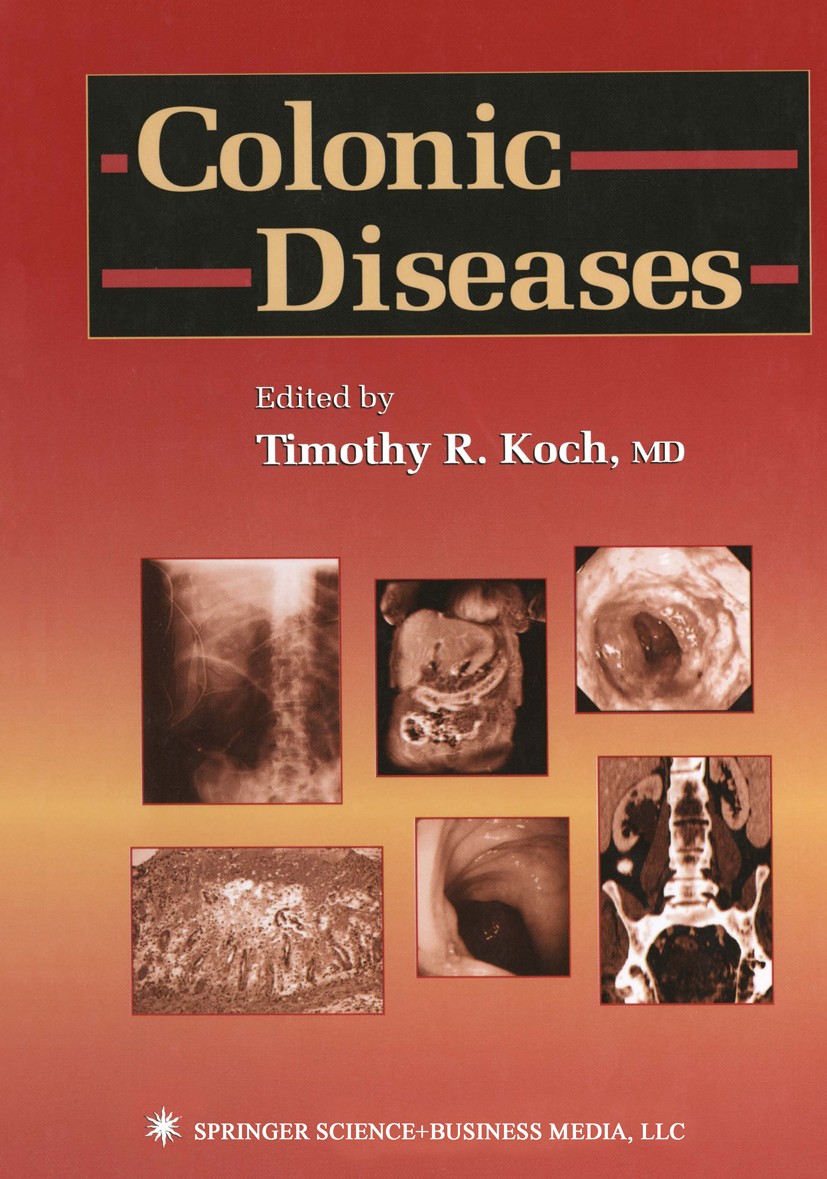 | | 描述 | The Scientification of Gastroenterology During the 20th Century * Science contributes to medicine in three ways: It provides a body of relatively secure knowl- edge. Some of that knowledge has been applied to develop technologies which have had a major impact upon the practice and effectiveness of medicine. Last, science offers to medicine a way of thinking. - 1. McCormick [(1993) The Contribution of Science to Medicine. Perspect. Bioi. Med. 16,315.] Awareness of the digestive system began with the dawn of civilization, when man, observing the feeding habits of animals in the surrounding environment, experimented with foods, edible and inedible. Identity came with discoveries of the digestive organs during the 16th and 17th centuries. Function was revealed by physiologic studies of digestion, absorp- tion and secretion, metabolism, and motility during the 18th and 19th centuries. Diagnostic access improved with the technological advances of the 20th century. Understanding of gas- trointestinal (GI) disease followed the growth of the basic sciences and gastroenterology‘s involvement in scientific research during the latter half of the 20th century. Early in the 20th century, gastroe | | 出版日期 | Book 2003 | | 關(guān)鍵詞 | biopsy; cancer; colon; colorectal cancer; gastrointestinal tract; imaging; immunology; inflammation; muscle; | | 版次 | 1 | | doi | https://doi.org/10.1007/978-1-59259-314-9 | | isbn_softcover | 978-1-4684-9740-3 | | isbn_ebook | 978-1-59259-314-9 | | copyright | Springer Science+Business Media New York 2003 |
The information of publication is updating

|
|


 |Archiver|手機(jī)版|小黑屋|
派博傳思國(guó)際
( 京公網(wǎng)安備110108008328)
GMT+8, 2026-1-25 03:34
|Archiver|手機(jī)版|小黑屋|
派博傳思國(guó)際
( 京公網(wǎng)安備110108008328)
GMT+8, 2026-1-25 03:34






 發(fā)表于 2025-3-21 16:24:57